
The History of College Mascots: From 19th-Century Good Luck Charms to Modern Game Day Outfits
Key Takeaways The Origin of the Word: The term mascot originates from the French word “mascotte”, meaning a lucky charm or talisman brought to bring good fortune. From Live Animals to Costumes:…

Key Takeaways
- The Origin of the Word: The term mascot originates from the French word “mascotte”, meaning a lucky charm or talisman brought to bring good fortune.
- From Live Animals to Costumes: In the late 1880s, universities used live animals (like Yale’s bulldog Handsome Dan) before transitioning to costumed performers in the mid-20th century.
- From Stadium to Streetwear: Vintage mascot logos from the 70s, 80s, and 90s have become iconic staples in modern collegiate fashion and everyday streetwear.
- Modern Mascot Outfits: Fans no longer wear full costumes; they celebrate school spirit through customized baseball jerseys, vintage graphic tees, and cozy game day hoodies.
What Is a College Mascot Outfit?
A college mascot outfit is any piece of fan apparel—including custom jerseys, vintage graphic sweatshirts, t-shirts, and game day accessories—that features a university’s official or retro mascot emblem.
Unlike a mascot costume worn by sideline performers, a mascot outfit allows students, alumni, and sports fans to wear their school pride in everyday, wearable fashion.
The Birth of College Mascots: 19th-Century Talismans and Live Animals
The tradition of the American college mascot began in the late 19th century as intercollegiate football gained national popularity. Teams looked for every psychological advantage and superstition to secure victory.
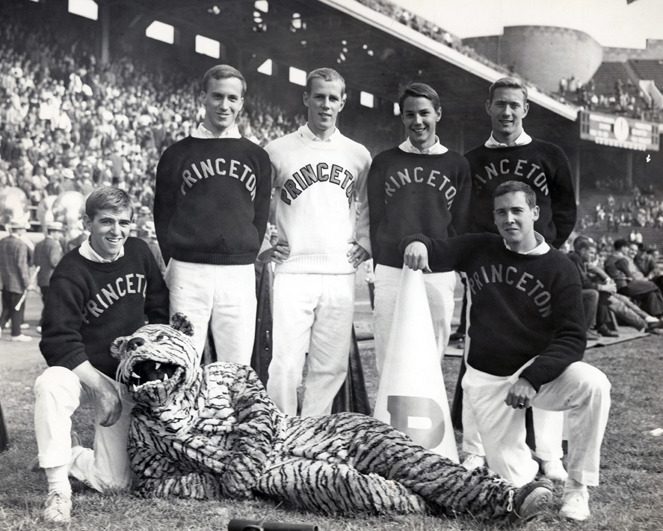
Vintage archival 1924 photo of Columbia University cheer squad and Tiger mascot. (Fotó: Underwood and Underwood/Corbis)
The word itself comes from the 1880 French operetta La Mascotte, popularizing the idea that certain creatures or objects possess magical good luck.
Initially, universities adopted live animals that embodied the grit, tenacity, or local geography of their region:
- Yale University (1889): Introduced Handsome Dan, an English Bulldog regarded as America’s first collegiate live mascot.
- The U.S. Naval Academy (1893): Adopted Bill the Goat after a legendary victory over Army.
- University of Texas (1916): Welcomed Bevo, the iconic Longhorn steer that became synonymous with Texas football pride.
As collegiate sports grew into national spectacles during the mid-20th century, live animals were replaced with costumed performers who could dance, rally the bleachers, and connect with fans.
Over time, these characters evolved beyond sideline entertainment. They became the official face of universities, embodying campus history, resilience, and community tradition.
The Mid-Century Shift: Enter the Costumed Character
By the 1950s and 1960s, the rise of televised sports transformed college football into major entertainment. Sidelines required characters who could dance, perform acrobatics, lead chants, and interact safely with fans.

Costumed college mascot hyping up cheering fans in the stadium bleachers
This era birthed the modern costumed mascot. Universities designed oversized foam heads, expressive fabric suits, and lively personas like Ohio State’s Brutus Buckeye (introduced in 1965) and the beloved Oregon Duck.
Mascots were no longer just passive talismans. They became the official ambassadors of school pride, uniting student bodies across generations.
The Psychology of School Spirit: Why Fans Wear Their Mascots
Why do fans hold such an intense emotional attachment to their mascot apparel? The psychology of school spirit comes down to three powerful human needs:
1. A Lifelong Sense of Belonging and Identity
Wearing a college mascot shirt is an instant badge of belonging. It signals that you are part of a shared community that spans across states, professions, and generations.
2. Nostalgia & Multi-Generational Traditions
Collegiate loyalty often runs in families. During Homecoming weekends, grandparents, parents, and students wear the same mascot emblems to celebrate their family’s collective memories.
3. The Power of Game Day Camaraderie
At pre-game tailgates, your mascot outfit creates an instant bond with fellow fans, turning thousands of strangers into a unified cheering section.
How Mascot Culture Transformed Campus Fashion & Game Day Outfits
As mascot icons became central to university branding, their artwork made its way off the field and onto varsity jackets, pennants, and collegiate apparel.
What started as simple stadium souvenirs has evolved into a cornerstone of American streetwear:
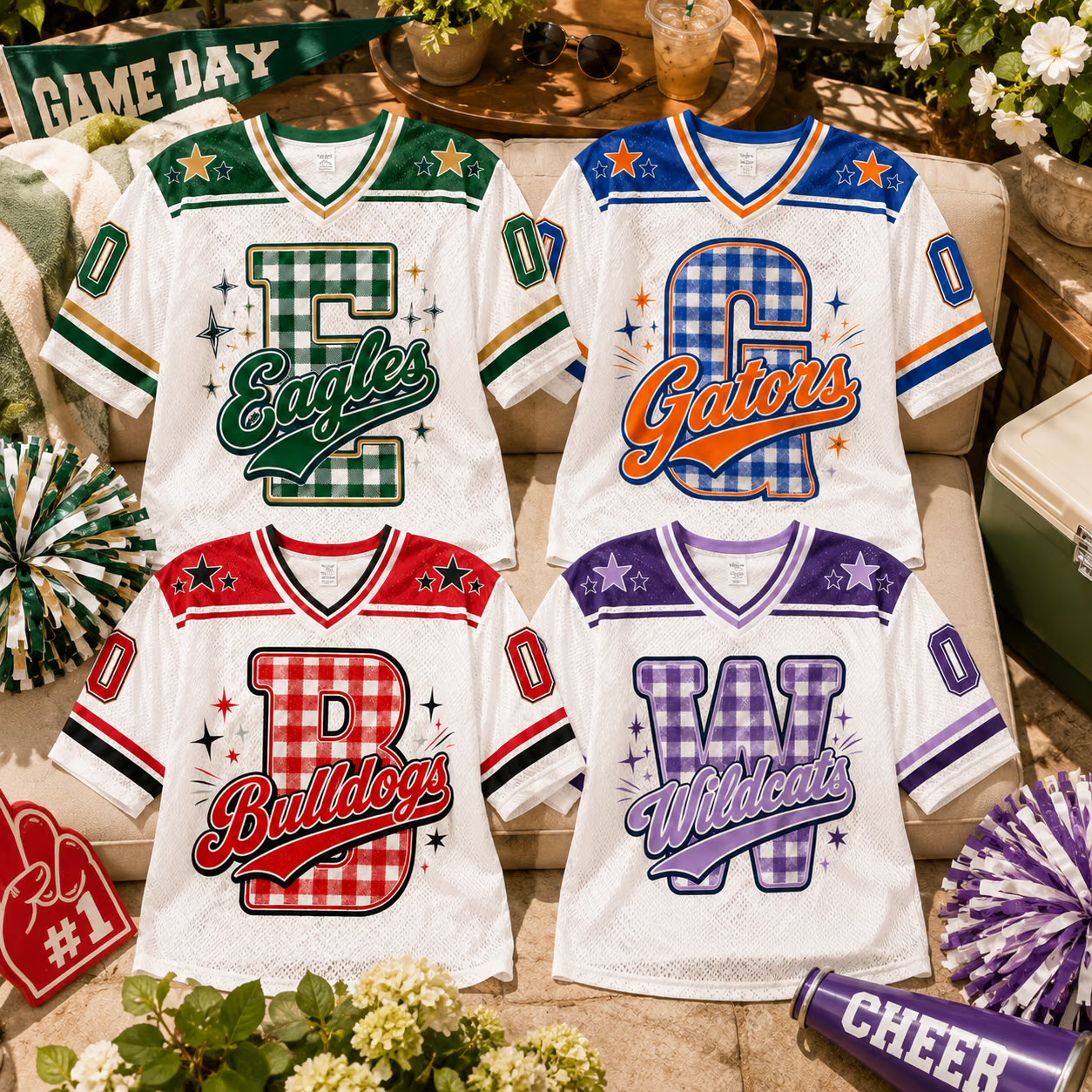
Custom college mascot baseball jersey and game day outfit flat lay
- The Vintage Mascot Tee: Retro hand-drawn mascots from the 1970s and 80s offer a nostalgic, timeless aesthetic that pairs effortlessly with denim and sneakers.
- Personalized Game Day Jerseys: Custom football and baseball jerseys let fans add their own name, graduation year, or lucky number alongside the mascot.
- Tailgate Sweatshirts & Hoodies: Heavyweight crewnecks and oversized hoodies have become the official uniform of crisp autumn Saturday tailgates.
- Campus Life Beyond the Stadium: School spirit now extends to dorm rooms and study desks through customized fleece blankets, ceramic mugs, and desk mats.
Why Personalization Matters in Modern School Spirit Wear
Today’s fans value individuality just as much as tradition. Wearing a generic shirt from the campus bookstore is great, but rocking a personalized mascot outfit creates a deeper connection to your alma mater.
Whether you are a freshman walking into your first pep rally, a proud parent attending Family Weekend, or an alumnus celebrating Homecoming, adding custom details like your name or graduation year makes your gear a personal keepsake.
Looking to create your own unique school spirit look?
Frequently Asked Questions (FAQ)
Q: What was the first college mascot in the United States?
A: Yale University’s English Bulldog, Handsome Dan, is widely recognized as the first official college mascot in the United States, adopted in 1889.
Q: What is the difference between a mascot costume and a mascot outfit?
A: A mascot costume is a full-body character suit worn by an official campus performer. A mascot outfit refers to fashionable, wearable fan apparel—such as graphic tees, custom jerseys, or hoodies—styled by students and fans for game days.
Q: Why do American universities have mascots?
A: Colleges originally adopted mascots as lucky charms to bring good fortune to athletic teams. Over time, mascots evolved into symbols of institutional identity, school spirit, and community pride.
Q: Why did American colleges transition from live animal mascots to costumed characters?
A: In the mid-20th century, the rise of televised sports and large stadium crowds created safety challenges for live animals. Costumed characters allowed schools to safely entertain fans, perform acrobatics, lead cheers, and create an engaging brand ambassador.
Q: How did college mascot culture evolve into modern fan fashion?
A: Mascot emblems originally appeared on sideline pennants and wool varsity sweaters. Over decades, campus pride and vintage nostalgia transformed retro mascot graphics into everyday collegiate streetwear, custom jerseys, and personalized game day outfits.
Conclusion
From early sideline superstitions to today’s iconic collegiate streetwear, college mascots remain timeless symbols of unity and passion. Wearing your school’s mascot is a celebration of where you’ve been, the memories you’ve made, and the community you will always belong to.
Related Reads
 August 18, 2026 · 7 min read
Why Is It Called Football If You Throw It? The Fascinating Origin of the American Gridiron
 August 18, 2026 · 7 min read
The Rise of Longhorn Nation: Texas’s Most Iconic Games
 August 18, 2026 · 7 min read